Welding is a vital trade in many industries, from construction to manufacturing. But like everything else, welding is changing. Innovative technology, shifting job demands, and evolving education are shaping the future of this important field. This blog explores what is happening in the welding industry, including statistics from 2024 and predictions for 2025 and beyond. Read on to learn how careers and education are adapting.
Welding Career Outlook
The demand for skilled welders continues to grow. According to the American Welding Society (AWS), the U.S. needed more than 400,000 welders in 2024 due to retirements and industry expansion. Current data reveals that 21% of the country’s current welders are over 55 years old, so demand is high for younger workers to enter the field as older workers retire. More than 82,000 workers are expected to fill welding jobs annually between 2024 -2028. Of all the sectors that rely on welding, manufacturing is seeing rapid growth as infrastructure projects increase.
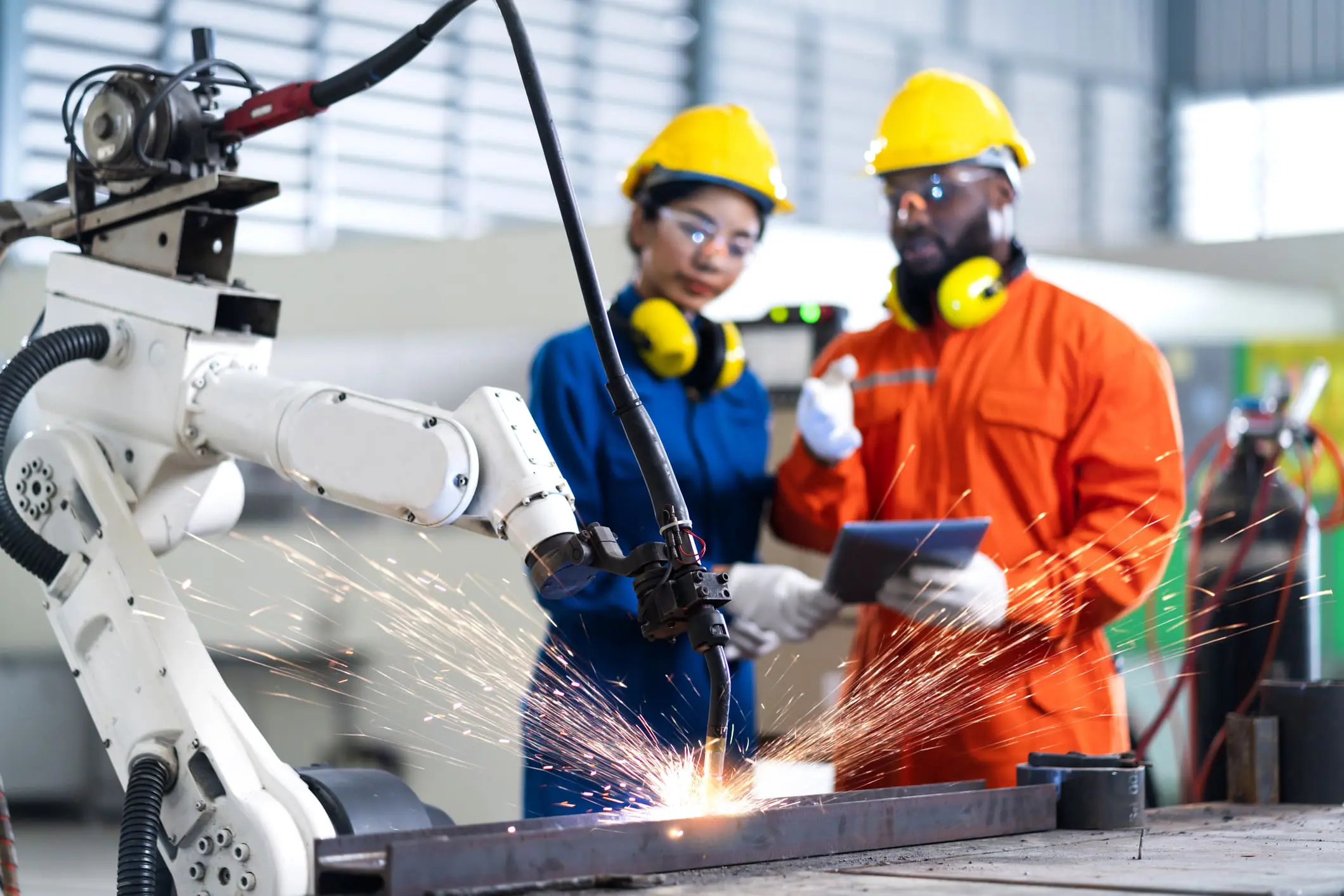
Industries like aerospace and energy need welders with advanced skills, such as working with exotic metals or underwater welding. Additionally, more companies are using robotic welding systems. These machines can manage repetitive tasks, but they still require skilled workers to program, maintain, and troubleshoot them.
Technology’s Role in Welding
Technology is changing how welders work. In 2024, advanced tools like laser welding, 3D printing, and augmented reality (AR) increased in popularity. Industry experts predict that more companies will invest in hybrid welding systems that combine human expertise with robotic efficiency. These types of advanced tools will require welders to have tech skills, like programming and operating computerized equipment.
Examples where technology is shaping the welding industry include the following:
- Laser Welding: This method provides more precision and speed compared to traditional techniques.
- 3D Printing: Metal 3D printers allow for the creation of complex parts that previously required multiple welds.
- Augmented Reality Training: AR headsets help students learn welding by overlaying virtual guides onto real-world tasks, making training safer and faster.
The Future of Welding Education
As the welding industry evolves, welding education must evolve as well. More schools and training programs are adapting their programs to include modern tools and techniques. For instance, welding schools teach students how to use and maintain robotic welding systems. Virtual classes and AR simulations are making it easier for students to learn welding from anywhere. Programs are offering specialized certifications for advanced skills like laser welding and working with specific materials.
Experts expect more partnerships between welding schools and companies to form, offering employees hands-on learning experiences. They also predict that shorter, more intensive training programs will help fill the gap left by retiring welders.
At Vocational Training Institute in Phoenix, one such program allows attendees to participate in a 20-hour MIG welding workshop over the course of one weekend. MIG welding, or Metal Inert Gas welding, is commonly used in the automotive, construction, and manufacturing industries. At VTI’s workshop, students gain skills to perform high-quality welds in the 1G, 2G, and 3G positions. This type of welding is beginner-friendly, making it a desirable choice for those just entering the welding industry. VTI conducts the workshop monthly.
Welding Challenges
Despite its bright future, the welding industry faces some challenges. The worker shortage and skills gap remain a major issue. Many young people are unaware of the opportunities for careers in welding. Then there are safety concerns. Welding involves risks like burns, fumes, and eye damage. Employers are focusing on improving safety measures, but this could be a deterrent for future workers. Finally, high-tech equipment can be expensive, making it harder for smaller schools to stay current and offer the most up-to-date learning.
Preparing for the Welding Future
To succeed in welding, workers need to stay updated and adaptable. To prepare for the future, those interested in starting a welding career should take courses in robotics and computer-aided design (CAD). If you already are a welder, continue learning advanced welding techniques, renew certifications regularly and consider earning advanced credentials. It is also suggested to join or follow organizations like the American Welding Society to stay informed about industry trends.
The welding industry is evolving quickly. With advances in technology, changing job demands, and updates in education, the future is full of opportunities for skilled workers. By staying informed and adaptable, welders can look forward to a successful career in this dynamic field. To stay up to date and gain valuable skills, contact VTI for our welder training programs or MIG workshop.