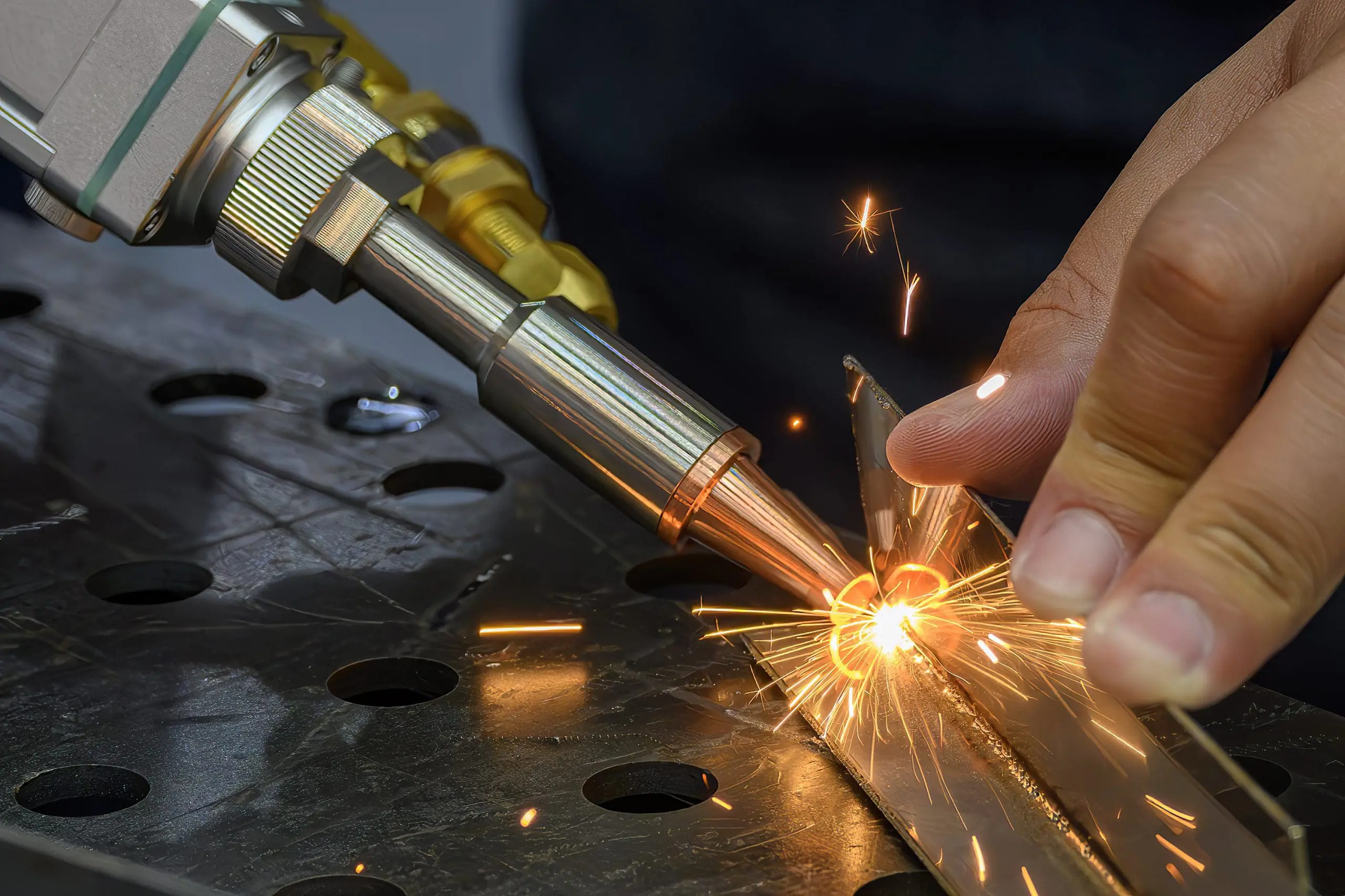
There is a lot of complexity to the field of welding that people outside the industry aren’t aware of. It isn’t just one thing; it is actually an array of different techniques that are assessed and applied depending on the needs and requirements of the weld at hand. Some of them are more specialized, and some of them, like MIG Welding, are foundational skills that every welder needs to know.
What Exactly Is MIG Welding?
MIG stands for metal inert gas, and it’s a subtype of gas metal arc welding, aka GMAW. GMAW is a process where an electric arc forms between a consumable MIG wire electrode and the metal, heating the metal, which then causes them to fuse together. Additionally, a shielding gas feeds through the welding gun, shielding the process from atmospheric contamination.
Developed in the 1940s, GMAW was originally for welding aluminum and non-ferrous materials, but quickly applied to steels because of the faster welding time. Since then, it’s gained even more versatility, which increased its popularity until it became the most common industrial welding process. However, it is rarely used outdoors or in areas with moving air, where processes like shielded metal arc welding are preferred.
MIG welding has two main transfer modes: short-circuiting or drop transfer (globular or spray).
- Short-circuit transfer uses the lowest range of welding currents to produce a small, fast-freezing weld pool, making it possible to weld thinner sections.
- Globular drop transfer uses a ball of molten metal larger that builds up on the end of the electrode and then drops onto the workpiece. It’s generally limited to flat and horizontal positions and thicker workpieces.
- Spray transfer uses a process where the weld electrode metal is rapidly passed along the stable electric arc, essentially eliminating spatter. Because of its larger weld pool, it’s most often used on thick workpieces in flat or vertical-down positions.
What Is MIG Welding Used for?
MIG welding has quite a few different uses as it’s considered one of the most versatile and widely used processes because it is highly efficient, easy to use, and produces clean, strong welds.
Some of the industries you’ll find MIG welding:
- Automotive manufacturing — MIG allows for precision especially with thin metals and creates a smooth finish, which makes it perfect for fabricating components and reducing the need for post-weld finishing.
- Aerospace — MIG can weld the lightweight, heat-sensitive materials needed in aerospace and do it with accuracy.
- Construction — The MIG process can complete long welds quickly with consistent strength, making it invaluable for infrastructure and heavy-duty supports.
- Manufacturing — Industrial fabricators and manufacturers rely on MIG welding because its steady arc can maintain accuracy and consistency on large-scale productions.
Why Should You Learn MIG Welding?
If you’re considering becoming a welder, MIG welding is one of the first processes you should learn, and we’re going to break down why:
Marketable and Easy to Learn
It is generally considered to be one of the easiest welding techniques to master, which makes it an ideal entry point for beginning welders. And given how popular it is, having experience in MIG welding makes you more marketable to employers.
Versatile
We mentioned this above, but it’s worth emphasizing again just how versatile MIG welding is on every level. It can be used on a wide range of metals and alloys of various thicknesses. It allows welders to perform well in all positions, including vertical and overhead. It can bond materials of two different thicknesses and be used on everything from spot welding to continuous metal sheets. There is a reason why it is utilized in almost every industry.
Efficient
The speed and efficiency factors of MIG welding are incredible bonuses. Because a wire is fed through the MIG gun, providing a continuous stream of binding material, you can work for longer stretches uninterrupted, significantly improving your productivity while also producing consistent, quality welds. MIG welding also allows for better control of the weld puddle.
Cleaner and Safer
Many welding techniques can produce fumes, but with MIG welding, those fumes are greatly reduced, which makes it much safer. It also produces less splatter and welding slag compared to other methods, which reduces waste, produces cleaner welds, and makes for much less clean-up.
Effective
Usually a faster process means a reduction in quality, but that is not the case with MIG welding. It produces solid, reliable bonds on almost every type of metal of a high enough quality that it can be used on car parts, infrastructure pipes, and other critical components where a low-quality bond could mean disaster.
What Is the Best Way to Learn MIG Welding?
The ideal way to add MIG welding to your skillset is through a hands-on training program, preferably one that readies you to sit for your AWS Certification. The good news is that, at a school like Vocational Training Institute, it only takes one 20-hour workshop to learn the basics of MIG welding, with no prerequisites.
In a very short amount of time, we cover:
- Introduction to Welding
- Welding Safety & Protective Equipment
- Variations of Metals and Environment
- MIG (GMAW) Equipment & Filler Metals
- Position Testing 1G and 2G
All of this is finished by a capstone project where you create something of your choice using one or more methods of welding.
Foundational Techniques for a Better Career
Welding is a vital, growing career that makes everything from home construction to infrastructure to aerospace possible, and you can get started with the Welding Training Program at Vocational Training Institute in Phoenix. Founded by a veteran with experience in the skilled trades, VTI supports our students from enrollment to graduation and beyond. We prioritize practical, real-world experience through short-term, fast-paced programs, so that you can graduate confidently in your abilities and get started on your future.
Get your start with VTI’s Welding Training Program or contact us today to learn more about our school and how we can help you find success.