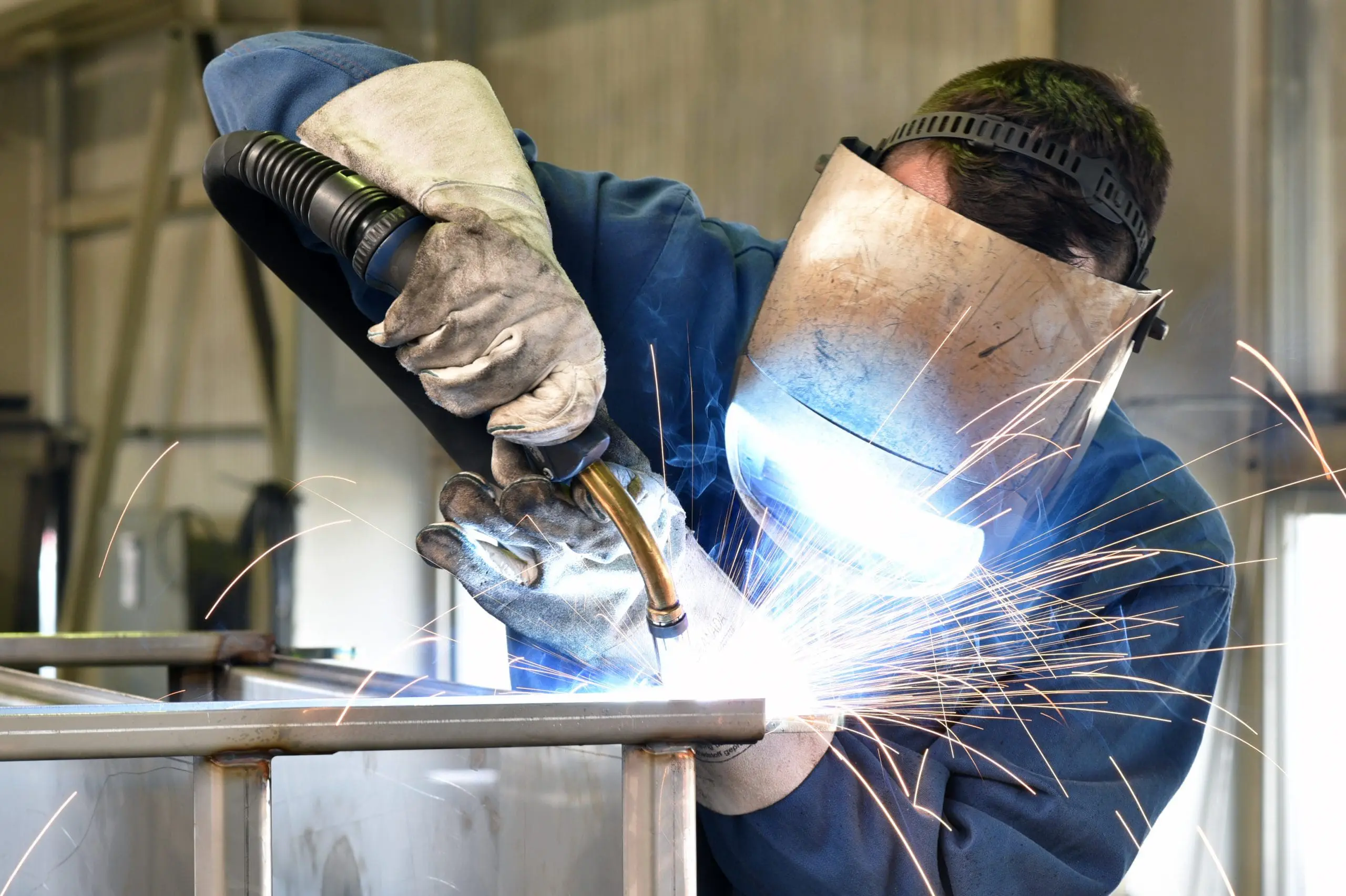
If you picture sparks flying and metal fusing together under incredible heat, when you think of welding, you would be accurate. But what most people don’t picture is the amount of safety and discipline that makes welding possible in the first place. At Vocational Training Institute’s Phoenix welding training program, welding safety training isn’t just a box to check—it’s the foundation of every lesson.
Why Welding Safety Training Comes First
Welding involves high temperatures, bright light, molten metal, and powerful equipment. Without proper precautions, welders risk burns, eye damage, and exposure to harmful fumes. That’s why the very first thing any welder training program should teach students isn’t how to strike an arc. Instead, it should be how to protect themselves and others in the shop.
The Core Principles of Welding Safety Training
1. Personal Protective Equipment (PPE)
Students should learn to use the right gear every time they enter the welding booth:
- Safety glasses are the No. 1 priority because they are always required when in a welding lab
- Auto-darkening helmets and hoods to protect eyes and face are required when physically in the act of welding
- Flame-resistant jackets and gloves
- Proper boots to prevent burns from sparks
- Respirators when welding materials that emit hazardous fumes
The Occupational Safety and Health Administration has a whole slew of information about welding PPE on it’s website. It categorizes safety and health topics for welding, cutting, and brazing. OSHA’s PPE guidelines for welding cover eye and face protection, respiratory protection, head protection, foot protection, hand protection, and fall protection systems. That might sound like a lot, but PPE is the No. 1 way to remain safe when welding.
2. Ventilation and Air Quality
Arizona heat may be intense, but proper airflow in a welding environment is non-negotiable. Your welding safety training should teach fume extraction systems and safe practices to ensure students breathe clean air while they work. Respiratory protection is important to understand even if it not always practiced when in an open-air welding environment. The American Welding Society (AWS) provides detailed guidance on fume safety and ventilation standards.
The National Institute for Occupational Safety and Health (NIOSH), offers guidance about welding fumes and manganese, an essential nutrient. Welding fumes are composed of metals and most fumes contain a small percentage of manganese. With proper training and awareness, welding students can practice safety measures to avoid issues.
4. Electrical and Equipment Safety
Welding equipment runs on powerful electrical currents. Students should learn to inspect cables, ground equipment properly, and shut down machines before adjusting equipment.
5. Situational Awareness
Perhaps the most important habit: always be alert. Students learn to scan their surroundings, communicate with others in the shop, and stay focused while working. For a deeper look at welding hazards, see CDC’s NIOSH welding safety resources.
Building Welding Safety Habits for a Lifetime
The goal of welding safety training isn’t just to pass a class—it’s to instill habits that last a welder’s entire career. Whether working on a construction site in Phoenix, fabricating for aerospace, or joining pipelines in the field, welders who prioritize safety protect themselves, their coworkers, and the quality of their work.
Start Your Welding Journey the Safe Way
If you’re ready to turn your interest in welding into a career, start with a program that takes safety seriously. At Vocational Training Institute, our Pheonix-based welding school combines hands-on instruction, industry-standard safety protocols, and experienced instructors who care about your success. Enroll today and learn welding the right way: safe, skilled, and ready for the workforce.