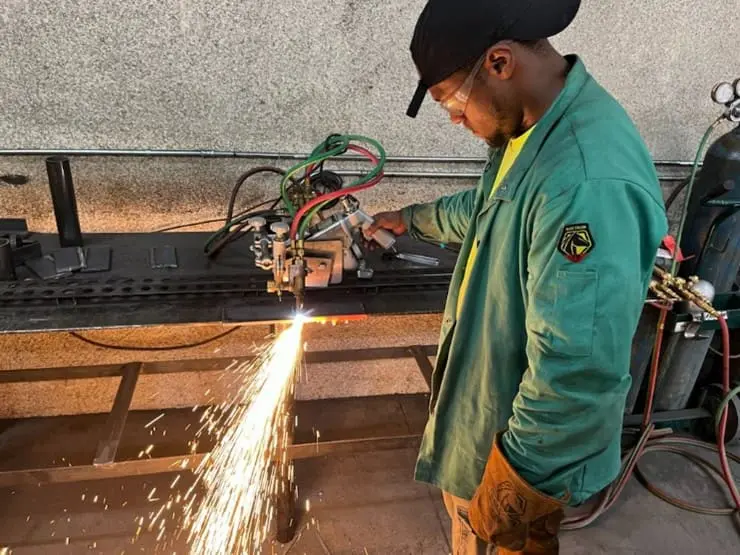
Online school has become a big trend over the past decade, and for certain degrees and career paths, it can be a great option for learning. But some careers just aren’t a good fit for online education, and welding is one of them. There is a limit to what you can learn about being a welder via virtual education because of one simple thing: hands-on training.
Hands-on training – in the form of lab work, internships, apprenticeships, and more – is absolutely essential to an effective welding training program. Let’s talk about why:
Real Equipment Means Real-World Skills
A welder is only as good as their equipment and their knowledge of how to use that equipment. At its core, this is a hands-on field, and the best way to start learning this career is to start doing it. A good welding education program will prioritize you getting into the lab and getting your hands dirty by practicing on equipment that will be similar, if not the same, to the pieces you’ll be using on the job. Instead of only reading about theory and techniques in the classroom, implementing hands-on experience into the learning path lets you immediately apply what you’ve learned and start building on it.
At Vocational Training Institute, for example, students learn positions 1F to 4F and techniques 1G to 4G over 287 hours, so they get a broad understanding and practice of welding application. Additionally, because of the potential safety risks on a welding job site, real-world equipment and practice also allows you to get hands-on experience in safety procedures and precautions, like avoiding burns, electrical shocks, and hazardous gases.
Practice and Problem-Solving Lead to Adaptability
Knowing technique is one thing; knowing how to apply, troubleshoot, and utilize the right technique for the right welding job is another. Welders must have strong problem-solving skills, a strong attention to details, and an ability to adapt to different kinds of jobs and work environments. Hands-on welding education helps you build these characteristics and traits, giving you hours of practice before you even start applying for jobs. You will make mistakes, reassess, pivot, and try again within the parameters of a training environment. You can become more familiar with oxyfuel cutting, SMAW, joint alignment, groove welds, and more, without the pressure and worry of messing up a job task or client request.
Real-Time Feedback Develops Confident Welders
Hands-on training, especially within an accredited welding education program, gives you the benefit of in-person, upfront feedback and guidance. You don’t have to muddle through, trying to figure out what went wrong; you can have an instructor right there to point out potential errors, give recommendations on how to fix or improve your skills, and overall keep you on track toward your career goal.
This, in turn, better helps you to build confidence and competence in your abilities. You have had the chance to work with the tools, handle different problems and challenges, and function with proficiency – all of which makes it easier for you to step from the welding classroom to the job market.
Practical Foundation Can Lead to More Opportunities
The truth is, most welding companies and employers are looking for applicants who have experience. Whether that’s an internship, a hands-on lab, or an apprenticeship, they want to hire people who know the difference between MIG vs TIG and how to weld both. Very few of them are going to bring someone who has never held a torch onto a job site where the job and other workers could be at risk.
Additionally, having hands-on training better prepares you to pursue welding certifications. Certifications are a great way to expand on your skills, hone new ones, and open up more employment opportunities. But you can’t look to certifications without a solid welding foundation, and that is best formed by hands-on experience.
Hands-On Welding Training at VTI
Welding is a vital, growing career that makes everything from home construction to infrastructure to aerospace possible, and you can get started with the Welding Training Program at Vocational Training Institute in Phoenix. Founded by a veteran with experience in the skilled trades, VTI supports our students from enrollment to graduation and beyond. We prioritize practical, real-world experience through short-term, fast-paced programs, so that you can graduate confidently in your abilities and get started on your future.
Get your start with VTI’s Welding Training Program or contact us today to learn more about our school and how we can help you find success.