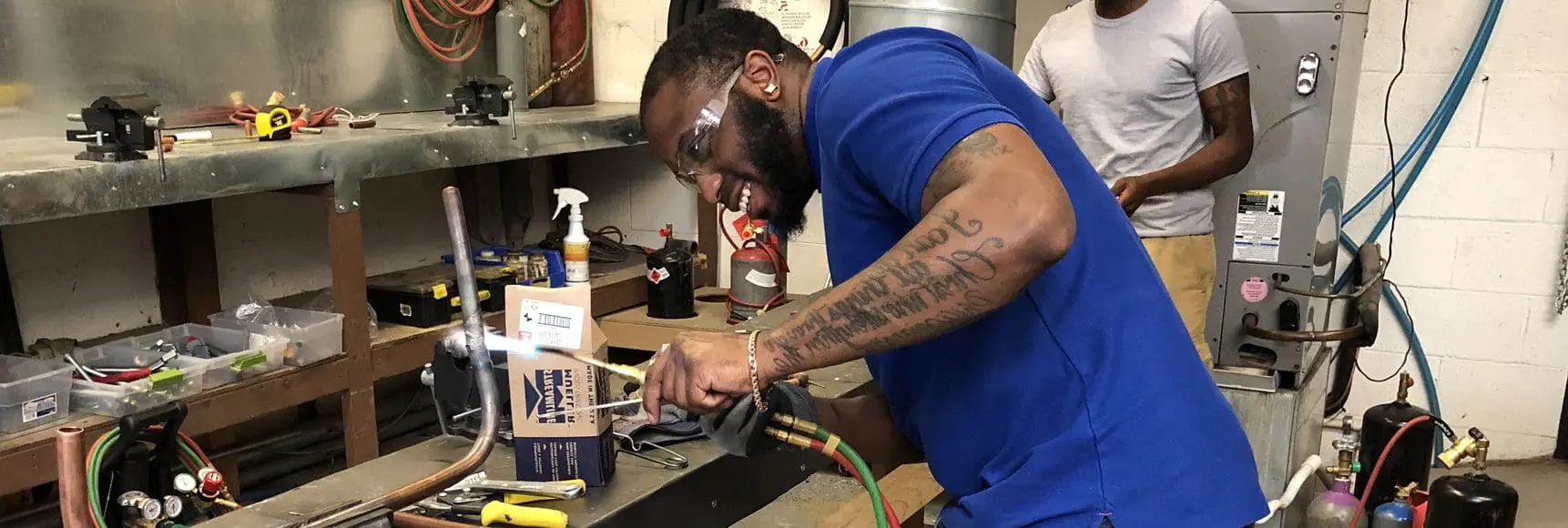
There are a lot of professions out there where you can learn what you need to know from a seat in a classroom. You can be taught theories, ideas and general skills that might help you by reading them out of a book. And while you can expect to have some classroom and textbook learning, a welding degree program is much more. Hands-on learning with practice to become an expert with the tools and techniques is essential. If you are thinking about becoming a welder, here is an overall glance of what you can expect and how you can prepare to enter a welding degree program. These tips could set you up for success.
Welding Admissions Prerequisites
Welding training schools, like Vocational Training Institute in Phoenix, often have a few basic requirements for those who are looking to enroll. Some will need you to have a high school diploma or GED, but almost all of them have minimum age requirements before you can apply.
VTI, for example, requires you to:
- Be at least 18 years of age
OR
- Be 17 years of age and have a parent or guardian co-sign the enrollment agreement.
Before enrolling, you should also make sure you get all the school’s information on their welding program and take a tour of their labs and facilities.
Physical Requirements
Welding is a physical job, so there are certain functional standards you’ll need to meet to be successful in a welding degree program and a welding career in general.
You’ll need to make sure you’re able to:
- Bend, stoop, stand, etc., for long periods of time
- Lift heavy pieces of metal and equipment, including lifting 50 pounds up to eye level
- See well and clearly, with or without corrective lenses
- Keep your hands very steady with a focus on manual dexterity
Taking steps to ensure you’re in good physical health and working on your mobility and stability will set you up for better success in a welding training program. If you don’t already include regular exercise in your week, now would be a great time to prioritize that and make it a habit before classes start.
Study Tips
Getting ready to start a hands-on training program is also about figuring out the best ways to make the most of the learning process. Here are a few things to keep in mind.
There are a lot of different welding methods out there. While you’ll be learning about them in more detail during your program, it’s extremely helpful to know the basics of the different procedures beforehand.
You’ll benefit from a math refresher. Like it or not, some basic math skills are required to be a welder. Simple, online refresher courses are available at sites like Khan Academy and IXL. You might be familiar with these if you have kids in school, and a quick visit to any source to brush up on math skills is a good idea. Geometry and trigonometry will be key when measuring angles and joints and maintaining your spatial awareness. Don’t let this scare you; just know it will be taught and included so you aren’t caught off guard. You’ll also need to be able to calculate lengths and measurements.
Stay up to date on industry developments with a quick visit (or frequent visits) to the American Welding Society’s website, where you can learn about new techniques, tools and technologies coming to market. Welding is not a static skill. Keeping an eye on the latest updates in the field will help you get more out of your training. Also, be ready to put in the hands-on time. More than anything else, you’ll need to put in the practice. You just can’t truly train to be a welder without practicing the skills and repeating them consistently to improve your skills, so take advantage of all the shop hours and classwork you can.
Prepare for a Future as a Welder at VTI
At Vocational Training Institute, we have faculty with real-world experience who can help you train for and grow your career as a professional welder. Our focused, hands-on Welding training program is specifically designed to get you ready for a new job and a new future. If you’re ready to get started, register with VTI in Phoenix today.