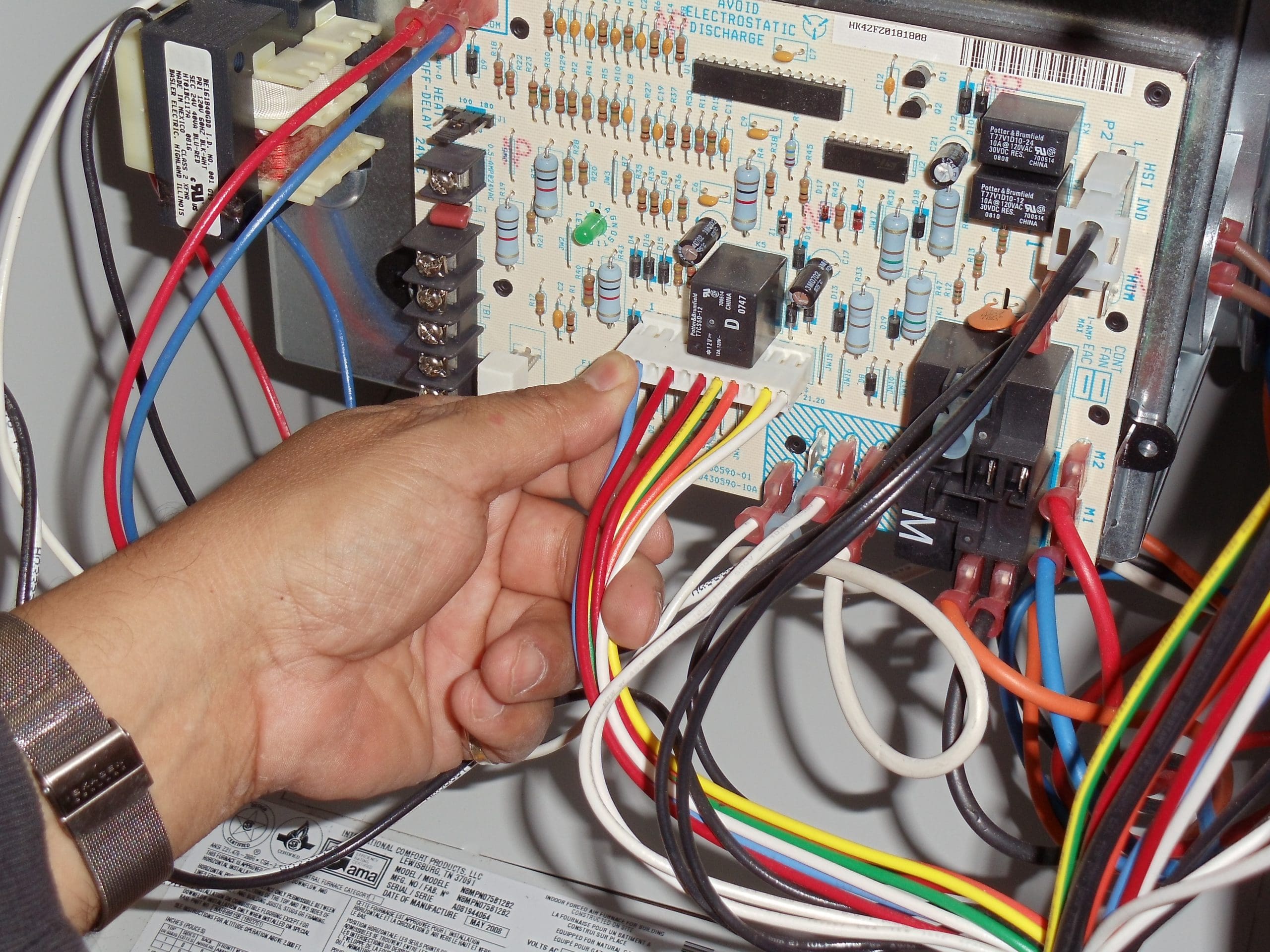
There are a lot of professions where you can learn what you need to know from a seat in a classroom. Instructors can use textbooks to teach the theories, ideas and general skills that will surely help in your career. But skilled trades require a much different type of learning. Sure, someone can try to teach you how to perform a skilled trade through notes on a whiteboard, but that won’t begin to give you a real understanding of the job. That’s why hands-on training in skilled trades is so very important.
First Off, What Are Skilled Trades?
As a category, the term “skilled trades” is used for any profession that requires a very particular set of skills or abilities. Most often these are physical, hands-on jobs in industries like:
- Construction
- Transportation
- Manufacturing
- Agriculture
- Services
Some of the most common skilled trade jobs include things like crane operator, plumber, electrician, truck driver, carpenter – and, of course, HVAC technician. According to the U.S. Bureau of Labor Statistics, jobs in the HVAC industry are expected to grow 9% by 2033. This is a much faster growth rate than the 4% increase expected among all occupations. Learn more about average pay and other HVAC career stats on the Occupational Outlook Handbook’s HVAC summary.
What Do You Mean When We Say “Hands-On Training”?
If you’ve ever heard the phrase “learn by doing,” then you already understand the core of hands-on training as both a concept and a teaching tool. Hands-on training is a method of learning where you acquire new knowledge and skills via direct experience. If your idea of higher education is sitting in a massive classroom, listening to endless lectures, then think of hands-on training as the opposite. It’s active, participatory, and all about experiences. It lets you get a feel for what you’ll be doing on the job in the safety of an education program where the stakes are low.
Why Is It So Important in the HVAC Field?
The role of HVAC technician is a hands-on job, so it requires hands-on training. As a heating, ventilation, and air conditioning technician, you will travel into job sites or the homes or businesses of customers to assess their HVAC systems, provide maintenance, and diagnose and fix any issues. You won’t be able to do that – and do that well – if all you know about the equipment is from pictures in a book. You need to know the ins and outs and tiny details of complex systems, so you can accurately solve problems.
An HVAC education program that doesn’t prioritize hands-on training fails to prepare its students for their future job.
What Kinds of Hands-On Training Should I Expect?
There are a few different ways an HVAC program or other skilled trade program might incorporate hands-on training:
- Simulation exercises – With the rapid advancement of technology, there has been an explosion of virtual and demo environments that let students perform simulated tasks that mimic actual scenarios. So, you could, for example, be presented with a virtual scenario of a malfunctioning residential heating unit that you could virtually take apart to practice troubleshooting the issue.
- Lab work – Even better than a simulation is the real thing. A quality HVAC or skilled trades program will have lab space where you will spend a lot of time interacting with the same equipment that you will encounter in the field. Being able to step up and say, “I know this unit, I’ve worked on it before,” is truly invaluable.
- Internship or apprenticeship placements – These usually are included at the end of a program bringing all your classroom and hands-on training together. A short-term internship or apprenticeship placement lets you take everything you’ve learned and apply it in the real-world under the guidance of the experienced professionals you’ve been placed with. It’s a great steppingstone to ready you for life after graduation.
- On-the-job training – When your skilled trade program is over, you should expect to receive on-the-job (OTJ) training at your place of employment. According to Training Magazine, this type of training “allows HVAC workers to develop new skills and knowledge through hands-on practice, observation of experienced technicians, and experimentation.” Even after you’ve been an HVAC tech for a while, you should expect to receive OTJ to stay up to date with the latest technologies and best practices. Equipment is always changing.
Hands-On HVAC Training at VTI
At Vocational Training Institute in Phoenix, AZ, we’re proud to say that hands-on training is at the core of our HVAC Technician program. Founded by a veteran who was running his own HVAC/R business, he knew exactly what skills HVAC technicians needed out in the field and built the school around that knowledge. We prioritize practical, real-world experience through short-term, fast-paced programs, so you can graduate and be confident in your abilities and get started on your future.
Get your start with VTI’s HVAC Technician Training Program or contact us today to learn more about our school and how we can help you find success.