You want to get started on a new career as an HVAC technician – that’s great! HVAC is an in-demand career field that is projected to grow much faster than the average over the next decade.* Now that you’ve made that decision, though, you have an intimidating task in front of you: selecting the right HVAC training program. There are a lot of them out there, and a lot of things to consider, so we’re breaking down the top 8 factors you need to look at when comparing your options.
No. 1 – Teaching Method
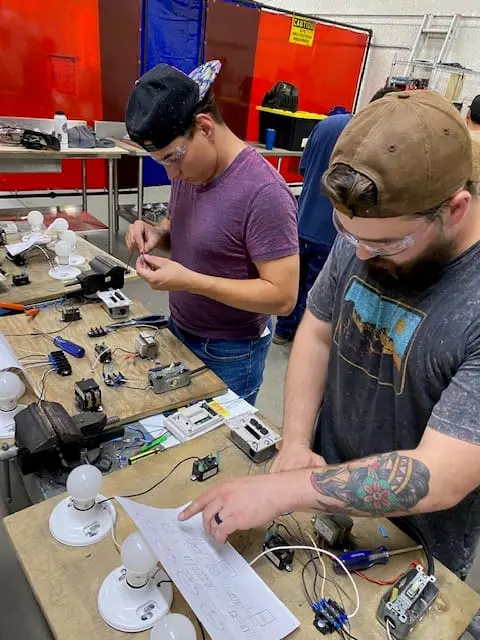
We’ve got this one at the top because, in our opinion, it’s the most important. Namely: how will you be learning the HVAC skills you need? Unlike a degree in literature or art, HVAC installation and repair isn’t something you can learn just sitting in a classroom. You need a training program that will prioritize you getting in there and getting your hands dirty, learning by doing. Any HVAC program that doesn’t include hands-on training or hands-on experience won’t be worth the money you put into it.
No. 2 – Instructor Experience
Beyond getting hands-on training, you also need to check who you’re getting that training from. A good HVAC program has instructors with actual, real-world experience working as an HVAC technician or contractor. You want to be guided and mentored by those who know what it’s like out there in the field, troubleshooting issues and dealing with employers and clients. They’re the ones who will be best equipped to prepare you for today’s HVAC job market.
No. 3 – Certification Preparation
While licensing and certification requirements can vary from state to state, and even from employer to employer, there is one in particular you want to make sure your HVAC program will prepare you for: the EPA Section 608 Universal Certification. A well-designed HVAC training program will incorporate the principles and concepts associated with this EPA certification so that you are prepared to sit for the exam. You’ll also want to make sure the program you select prepares you for safety and industry certifications that you will need to advance your career.
No. 4 – Class Size
The last thing you want is to invest money and time in a new career path only to get lost in a crowd of other students. All the hands-on training in the world isn’t going to matter if you’re in a packed classroom with an instructor who can’t give you the personalized attention you need. So don’t look at mega-universities or big sprawling campuses; instead, focus on career training schools that offer small class sizes that better cater to your goals and needs.
No. 5 – Program Length and Cost
How long can you afford to spend splitting your time between school and life responsibilities, especially when longer-term programs often coincide with higher tuition costs? An HVAC training program does not have to take years to ready you for the workforce. There are quality HVAC training programs that know how important your time and money are and can get you the skills you need in a matter of weeks.
No. 6 – Career Services and Job Placement
The school and HVAC program you pick should also offer assistance once you leave the classroom. This is your future, we’re talking about, so be sure to look into what kinds of career and support services the school offers. The school should be set up to help you with interviewing techniques, building your resume, and strategizing your job search. Ideally, it will offer long-term job placement assistance services to alumni, so that you can have support throughout your career.
No. 7 – Class Schedule
If you are a nontraditional or adult student, in all likelihood, you don’t have an open schedule to attend class that operates under a traditional school calendar. You have other responsibilities, you might be working another job, and you’ll need a program that’s flexible. Look for HVAC training that offers alternative class schedules – evening or weekend, instead of just daytime – and options to attend part-time instead of full-time to better accommodate your needs.
No. 8 – School Facilities
The last factor on our list is no less important than any of the others — what kind of facilities does the school you’re looking at offer. This is especially important in skilled trades like HVAC where you need hands-on training; you don’t want to train on outdated equipment or in unrealistic situations. A good HVAC program will have real, up-to-date equipment in their training environments that will closely mimic what you’ll be dealing with on the job.
Hands-On HVAC Training at VTI
When it comes to the HVAC Technician program at Vocational Training Institute in Phoenix, AZ, we hit all eight of the points above. Founded by a veteran who was running his own HVAC/R business, he knew exactly the skills that HVAC technicians and professionals needed out in the field and built the school around that knowledge. VTI prioritizes practical, real-world experience through short-term, fast-paced programs, so that you can graduate confident in your abilities and get started on your future.
Get your start with VTI’s HVAC Technician Training Program or contact us today to learn more about our school and how we can help you find success.